

Your variable-rate mortgage payment just jumped again. You’re staring at your bank statement wondering if it’s time to lock in before rates climb higher.
Here’s the thing: switching from a variable to fixed mortgage can shield you from future rate hikes — but it’s not always the smart play. Timing, cost, and your personal situation all matter.
Let’s break down when making the switch from variable to fixed mortgage makes sense and when you’re better off riding it out.
What Happens When You Switch from a Variable to Fixed Mortgage?
Switching from a variable to fixed mortgage means locking in your interest rate for the remainder of your term (or starting a new term through refinancing). Your monthly payment becomes predictable — no more surprises when the Bank of Canada adjusts rates. You’re trading flexibility for certainty.
Most Canadian homeowners make this switch at renewal. That’s when you can move from variable to fixed mortgage without penalties. If you’re mid-term, you’ll need to refinance, which means paying a penalty (usually three months’ interest on a variable mortgage) plus legal fees.
Bottom line: it’s easier and cheaper to switch at renewal.
Why Would You Switch Your Variable to Fixed Mortgage Right Now?
The main reason people move from variable to fixed mortgage is simple: they want payment stability. No guessing. No stress about next month’s bill.
But there are specific situations where switching makes even more sense.
You Need Predictable Monthly Payments
With a fixed-rate mortgage, your payment stays the same. Period. Whether the Bank of Canada hikes rates or drops them, you’re locked in.
That’s huge if you’re budgeting around other fixed costs — daycare, car payments, student loans. Knowing your exact housing expense for the next five years? That’s peace of mind.
Variable-rate holders saw payments swing by $200 to $400 per month in 2022 and 2023 as rates climbed. A fixed rate would’ve shielded them.
You Think Rates Are Going Up
If you believe rates will keep rising, locking in now could save you thousands. According to the Bank of Canada, the policy rate can shift four or five times in a year — and variable-rate mortgages move with it.
Real talk: timing the market is hard. But if rates are low or stable and you’re nervous about the direction, switching from variable to fixed mortgage protects you from future increases.
You won’t benefit if rates drop, though. That’s the trade-off.
You’re Planning Long-Term
Fixed rates work best when you’re staying put. If you’re planning to be in your home for five-plus years, a fixed rate lets you forecast housing costs accurately.
That’s helpful when you’re saving for retirement, planning a renovation, or paying off other debt. You can lock in your variable to fixed mortgage switch and move on with your life.
How Much Does It Cost to Switch from Variable to Fixed Mortgage Mid-Term?
If you’re switching before your renewal date, expect to pay:
- Three months’ interest penalty — On a $400,000 variable mortgage at 5.5%, that’s roughly $5,500.
- Legal fees — Usually $1,000 to $1,500 to register the new mortgage.
- Appraisal fee — Some lenders require this ($300 to $500).
- Discharge fee — Your current lender might charge $200 to $400 to close your old mortgage.
Total cost to switch from variable to fixed mortgage mid-term? You’re looking at $3,000 to $5,000 minimum, depending on your balance and lender.
That’s why most people wait until renewal — you avoid all those fees.
What Are the Downsides of Locking in a Fixed Rate?
Fixed rates aren’t perfect. Here’s what you give up when you switch from variable to fixed mortgage.
You Miss Out If Rates Drop
If you lock in and rates fall, you’re stuck paying more than variable-rate holders. You can refinance to a lower rate, but you’ll pay that penalty again.
Historically, variable-rate mortgages have cost less over time. The Bank of Canada’s data shows variable-rate holders paid less interest in 7 out of 10 market cycles since 1980.
Not a guarantee, but it’s worth knowing.
Fixed Rates Start Higher
Right now, fixed rates are typically 0.25% to 0.75% higher than variable rates. That means your payment goes up the day you switch — even before any future rate changes.
On a $400,000 mortgage, a 0.5% difference adds about $100 to $120 per month. Over five years, that’s $6,000 to $7,200 extra.
You Lose Flexibility
Variable-rate mortgages usually let you pay off up to 20% of your balance each year without penalty. Fixed-rate mortgages often cap prepayments at 10% to 15%.
If you’re planning to make lump-sum payments (say, from a bonus or inheritance), moving from variable to fixed mortgage could limit your options.
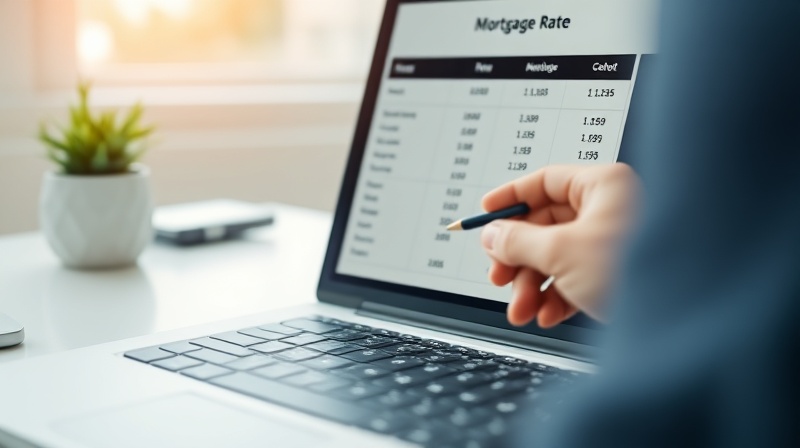
Should You Switch Your Variable to Fixed Mortgage at Renewal in 2026?
If you’re renewing this year, here’s how to decide. Think about your risk tolerance first. Can you handle your payment jumping $150 if rates climb? Or does that stress you out?
If you want certainty and you’re okay with paying a bit more upfront for stability, go fixed. If you’re comfortable with some variability and you think rates might drop (or at least stabilize), stick with variable.
Here’s a quick decision framework:
| Your Situation | Consider Variable to Fixed Mortgage Switch? |
|---|---|
| Tight monthly budget, can’t absorb payment swings | Yes |
| Expecting rates to rise over next 2-3 years | Yes |
| Planning to stay in home 5+ years | Yes |
| Comfortable with payment variability | No — stick with variable |
| Expecting rates to drop or stabilize | No — stick with variable |
| Plan to sell or refinance in 1-2 years | No — stay flexible |
Not sure which way to lean? A mortgage broker can walk you through your options based on current rates and your specific numbers.
How Do You Actually Switch from Variable to Fixed Mortgage?
The process depends on your timing. At renewal, it’s straightforward: your lender will offer you rate options (including fixed rates), you choose one, and you sign the renewal agreement. Done.
No penalties. No legal fees. Just a new rate and term.
If you’re switching mid-term, you’re refinancing. Here’s the process:
- Talk to a mortgage broker or your lender about current fixed rates.
- Calculate your penalty (three months’ interest on variable mortgages).
- Get pre-approved for the new fixed-rate mortgage.
- Your lawyer handles the paperwork (discharge of old mortgage, registration of new one).
- Your new fixed rate kicks in, and you start making predictable payments.
The whole thing takes about 30 to 60 days from start to finish.
What If You’re Already Locked Into a Fixed Rate and Rates Drop?
If you switch from variable to fixed mortgage and rates fall six months later, you’re not completely stuck — but breaking a fixed-rate mortgage is expensive.
You’ll pay either three months’ interest or the Interest Rate Differential (IRD), whichever is higher. On a fixed mortgage, IRD is almost always higher — sometimes $10,000 to $20,000 depending on your balance and how much rates have dropped.
That’s the price of certainty. You’re betting rates will go up (or at least stay flat). If you’re wrong, you either live with it or pay a steep penalty to get out.
Frequently Asked Questions
Can I switch from variable to fixed mortgage anytime?
Yes, but if you’re mid-term, you’ll have to refinance and pay a penalty — usually three months’ interest on a variable mortgage. At renewal, you can switch from variable to fixed mortgage without penalties. Timing matters.
Is a fixed-rate mortgage always safer than a variable to fixed mortgage switch?
Not necessarily. Fixed rates protect you from rate increases, but they also lock you in at a higher starting rate. According to Bank of Canada historical data, variable-rate holders have paid less interest over the long term in most market conditions. It’s about risk tolerance, not safety alone.
What happens if I lock in a fixed rate from my variable to fixed mortgage and rates drop?
You’re stuck with your higher rate until renewal or until you pay a penalty to refinance. That’s the trade-off for payment certainty. If rates drop significantly, you could refinance, but penalties on fixed mortgages (IRD) can be steep — sometimes $10,000 to $20,000.
How much does it cost to switch from variable to fixed mortgage mid-term?
Expect to pay three months’ interest as a penalty (roughly $5,500 on a $400,000 mortgage at 5.5%), plus legal fees ($1,000 to $1,500) and possibly an appraisal fee ($300 to $500). Total cost could be $3,000 to $5,000 depending on your mortgage balance and lender.
Should I switch to fixed if I’m renewing my variable to fixed mortgage in 2026?
It depends on your risk tolerance and where you think rates are headed. If you want payment certainty and can accept a slightly higher starting rate, switching from variable to fixed mortgage makes sense. If you think rates will drop and you’re okay with payment variability, stick with variable.
Not sure if switching from variable to fixed mortgage is the right call? Arch Canada can match you with a mortgage broker who’ll walk through your options, current rates, and costs — no obligation, just clarity.