
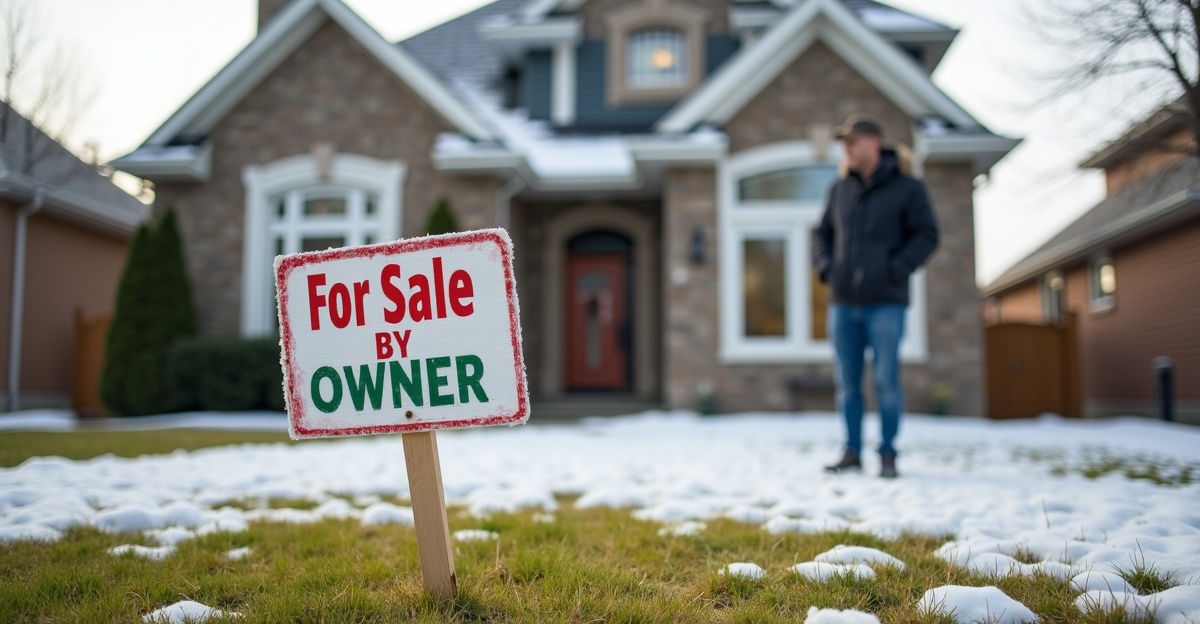
Your home's listed. Offer accepted. Then the commission bill arrives — $40,000 on an $800,000 sale.
That's when the math hits. Could you have pocketed that cash by selling solo?
Plenty of Canadian homeowners are considering selling without a realtor in Canada in 2026, especially as mortgage renewal rates climb and housing affordability tightens. But going solo doesn't mean skipping the work — or all the costs.
Should You Sell Without a Realtor in Canada to Save Money?
Commission savings are real but partial. Realtors typically charge 3–5% of your home's sale price in Canada. On a $1 million home, that's up to $50,000. Sell on your own and you avoid the seller's agent fee — usually 2.5% — but you'll still pay the buyer's agent commission.
Big drop.
Most buyers show up with their own agent, which means you'll pay the buyer's agent commission — often 2.5%. According to the Canadian Real Estate Association, that's the standard split in most provinces. On that same million-dollar home, you're still out $25,000. The full saving only happens if the buyer comes solo, which is rare.
Then there's the listing. To reach serious buyers, you'll need exposure on a Multiple Listing Service (MLS) platform. That costs $500–$1,500 as a flat fee. Photography, staging, minor repairs, and deep cleaning add another $2,000–$5,000 depending on your home's condition.
How Do You Handle Showings and Negotiations Yourself?
Once your home's live on MLS, you become the point person for every inquiry, showing request, and walk-through. Buyers often have tight schedules, and if they can't reach you within an hour or two, they move on.
Imagine this: a serious buyer drives by at noon on a workday, sees your for-sale sign, and wants to view immediately. If you're stuck in a meeting, they're gone.
Negotiations can get tricky without a buffer. When a buyer's agent submits a low offer or attaches conditions you don't understand, there's no one translating the fine print. You're deciding whether to counter, accept, or walk away — often on a tight deadline.
How Do You Price Your Home Without Overestimating?
Pricing is where DIY sellers trip up most. According to CREA data, overpriced homes sit on the market 30–40% longer than correctly priced ones, forcing eventual price drops that scare off buyers.
Realtors use comparative market analysis (CMA) — recent sales data for similar homes in your neighbourhood — to land on a competitive number. As a solo seller, you'll need to do that research yourself using MLS platforms, municipal assessment rolls, and sold listings.
Here's an example: a three-bedroom bungalow two streets over might look comparable, but if it has a finished basement and yours doesn't, that's a $50,000 gap.
A common mistake is pricing based on what you spent, not what buyers will pay. Emotional attachment clouds judgment.
What Legal and Marketing Costs Should You Expect?
Selling a home involves legal paperwork — disclosure forms, title transfers, deposit handling. A real estate lawyer in Canada typically charges $1,500–$2,500 to close a sale. You'll pay that whether you use a Realtor or not.
Marketing matters. According to CMHC, homes with professional photography sell 32% faster than those with smartphone snapshots. A photographer runs $300–$800 for a full shoot. Virtual tours, if you want them, add another $200–$500.
Disclosure forms are non-negotiable. Every province requires sellers to disclose known defects — leaky roofs, foundation cracks, electrical issues. Miss something, and you're liable post-sale. Realtors know what to disclose. DIY sellers often don't, which opens the door to lawsuits.
Can You List on MLS Without a Realtor?
Yes. Flat-fee MLS services let you list your home on the major platforms without a traditional agent. You pay a one-time fee (usually $500–$1,500), and your listing appears alongside every agent-backed property.
That visibility matters. In 2026, over 90% of Canadian buyers start their search on MLS-fed websites like Realtor.ca. Without MLS, you're relying on Facebook Marketplace, Kijiji, and yard signs — fine for cars, less so for $800,000 homes.
Flat-fee services don't handle showings, negotiations, or paperwork. They just post your listing.
What Are the Biggest Risks of Selling Solo?
Legal liability tops the list. A common misconception is that selling solo shields you from buyer lawsuits. It doesn't. If you fail to disclose a material defect, the buyer can sue you directly — and without an agent's errors-and-omissions insurance to cover you, you're paying out of pocket.
Pricing mistakes cost thousands. According to Statistics Canada, the average home price in Canada hit $697,000 in early 2026. A 5% pricing error — whether too high or too low — is a $35,000 swing. Price too high, and you sit on the market for months. Price too low, and you leave money on the table.
Buyer agents can lowball aggressively. Not gonna lie: some agents exploit DIY sellers. They know you don't have representation, so they submit offers $20,000–$50,000 below market and pressure you to accept quickly.
Frequently Asked Questions
How much commission do you save selling without a realtor in Canada?
You save the seller's agent fee (typically 2.5%) but still pay the buyer's agent commission. On a $1 million home, that's $25,000 saved, not $50,000.
Can you list on MLS without hiring a full-service realtor?
Yes, flat-fee MLS services charge $500–$1,500 to post your listing. Over 90% of Canadian buyers search on MLS-fed platforms like Realtor.ca.
What legal risks do DIY sellers face in Canada?
You're liable for undisclosed defects without an agent's insurance. A material defect lawsuit can cost tens of thousands in legal fees and damages.
Ready to take the next step? get matched with a mortgage broker.