Why Are GTA Home Prices Still Dropping Despite More Sales?
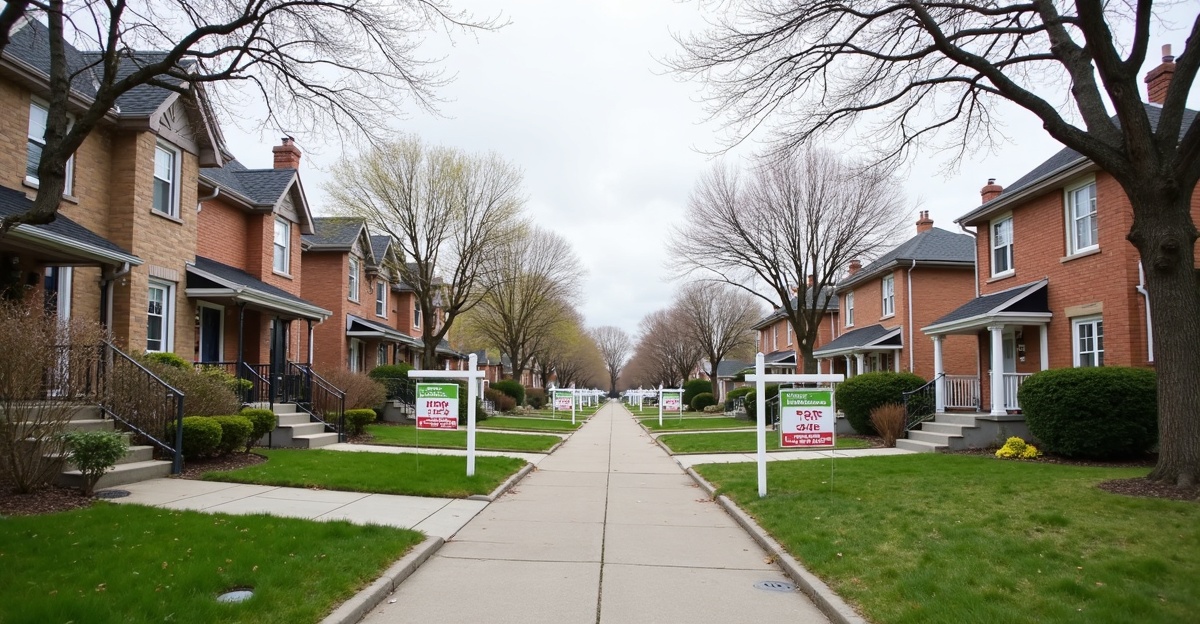
The Greater Toronto Area saw a 7% jump in home sales in April 2026 compared to last year. New listings fell 9.3% in the same stretch. That sounds like a hot market — tighter supply, more buyers.
It's not.
The average GTA home price hit $1,051,969 in April 2026, down 4.9% from $1,106,505 in April 2025. According to Patrick Rocca, broker at Bosley Real Estate, "it's a skittish market" — buyers and sellers both keep pulling back at the last second.
What's Making Buyers and Sellers So Nervous in 2026?
Rocca attributes the jitters to a rough year. A brutal winter, Middle East tensions, March break schedules, and a cold spring all stalled momentum. Sales that would've closed in February or March got pushed into April, inflating the month's numbers without signaling any real recovery.
Listings shrank because homeowners don't want to test a falling market. "They are worried about the value of their home," Rocca says. If you're sitting on a property worth $100,000 less than last year, listing feels risky — especially if you need to buy something else in the same market.
Buyers aren't confident either. Rocca describes clients who plan to submit an offer, then back out five minutes before presentation. Other times, a buyer's agent hints at a bid that never arrives. Low offers come in, but buyers walk when the seller counters. One couple torpedoed a deal after the husband decided he didn't like the house as much as his wife did — after conditions were already signed.
How Are Bidding Wars Still Happening If Prices Are Falling?
Andre Kutyan, broker at Harvey Kalles Real Estate, has sold four properties around $1.5 million in recent weeks — each with 9 to 13 offers. That price range pulls in first-time buyers, condo upgraders, downsizers, and plenty of help from the bank of mom and dad. "There's a ton of people out there looking," he says.
His strategy: set an aggressive asking price below market value to spark competition. At 467 Hillsdale Ave. E. in Toronto's Davisville neighbourhood, Kutyan listed a three-bedroom semi for $1.195 million after it failed to sell at $1.649 million with another agent. Nine offers came in. Final sale: $1.481 million — beating the earlier failed agreement from fall 2025.
But it's a gamble. Set the price too high and you'll get lowball bids justified by speeches about Trump, inflation, or the war in Iran. Kutyan's seen the script a hundred times. "You've got to flip the narrative on the buyer," he says. A bidding war shifts the buyer's mindset from "how little can I pay?" to "what do I have to do to get this?"
Are More GTA Homeowners Losing Their Homes to Lenders?
Yes. Rocca says he's seeing more power of sale listings — properties where the lender takes over after the owner defaults. Mortgage delinquencies are rising fastest in Ontario and British Columbia, the two provinces that saw the biggest home value drops in 2025, according to RBC economists Rachel Battaglia and Abbey Xu.
Some buyers hunt for distressed sellers hoping for a bargain. But lenders want the highest price they can get. "People think they're getting a bargain but not necessarily," Rocca notes.
Should You List Your GTA Home in 2026 or Wait?
If you don't need to sell, don't list. Kutyan learned that the hard way when a homeowner in Hogg's Hollow threw him out after he recommended an asking price. She didn't need to sell — she just wanted to "test the waters." That's not how this market works.
Here's the thing: listings are shrinking because hesitant sellers are staying put. That contraction might prop up prices later in the year if demand holds. But if you're serious about selling, you need to price aggressively and set an offer deadline. Kutyan says not every seller accepts his pricing advice — and he sometimes loses listings to competitors who promise a higher number.
For buyers, the same logic applies in reverse. If you're waffling on every property, you'll lose the good ones. Rocca estimates the delayed spring market might extend the season a few extra weeks in 2026, giving you a slightly longer window — but indecision costs you when nine other offers land on the same house.
What Does the Data Say About Home Affordability in the GTA Right Now?
Average sale prices dropped 4.9% year-over-year in April 2026. That's not a collapse, but it's not nothing. RBC economists note that falling home values don't directly drain savings, but consumers who watch their home equity shrink tend to cut spending. Higher energy costs in Ontario and BC make it worse — households in those provinces already absorbed the biggest real estate losses in 2025.
Most of Canada's mortgage delinquency increases are concentrated in Ontario and BC. If you're carrying a variable-rate mortgage or renewing at a higher rate in 2026, budget carefully. CMHC data shows that stretched homeowners are the first to crack when rates stay elevated.
Frequently Asked Questions
Why did GTA home sales rise 7% in April 2026 if prices are still falling?
Sales rose partly because harsh winter weather and spring delays pushed transactions into April, inflating the monthly count. New listings dropped 9.3%, which suggests sellers are hesitant — not that demand suddenly spiked.
How low should you price a GTA home to trigger a bidding war in 2026?
Brokers like Andre Kutyan recommend pricing 10-15% below recent comparables in the $1.5 million range. A three-bedroom semi in Davisville listed at $1.195 million (down from $1.649 million) drew nine offers and sold for $1.481 million.
Are power of sale listings actually cheaper in the GTA right now?
Not necessarily. Lenders want the highest recovery price, so buyers hoping for a steep discount often walk away disappointed. Power of sale volume is rising as more homeowners default, but expect competitive bidding on well-located properties.
Ready to take the next step? Arch Canada can match you with a broker.